


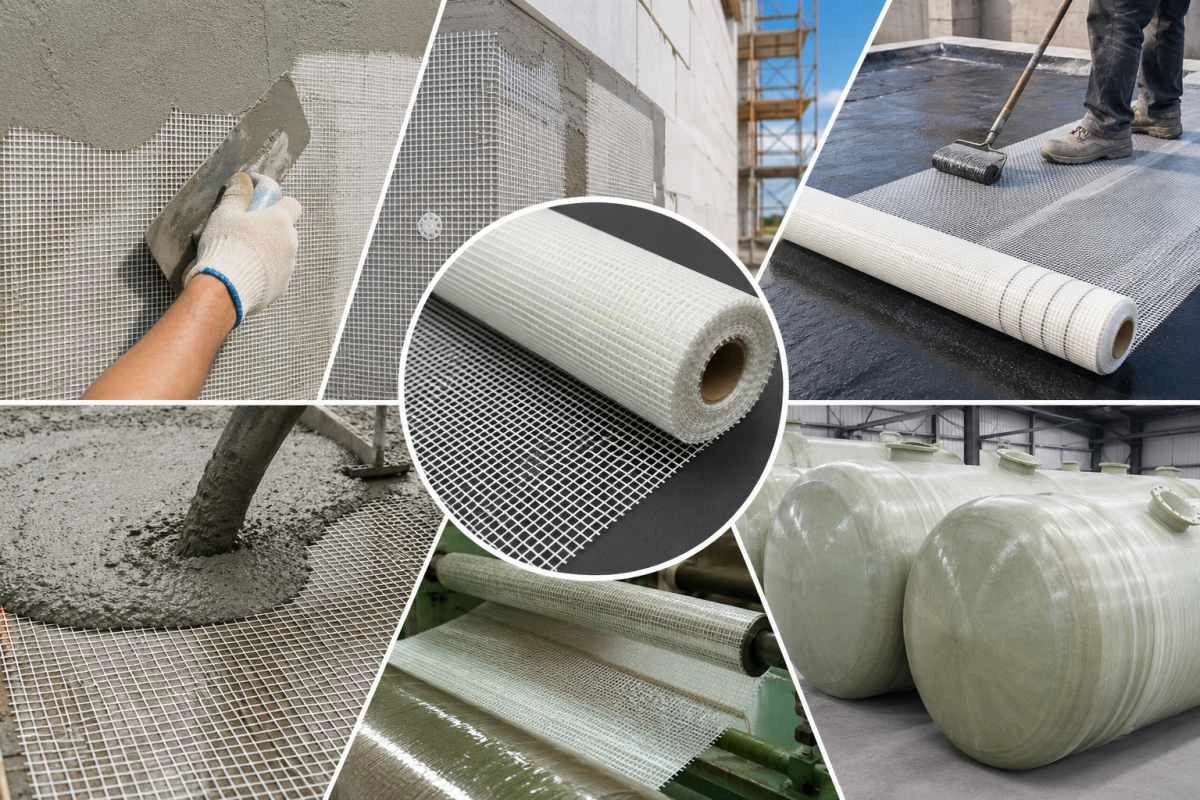
Fiberglass Woven Mesh Fabric has become an essential reinforcement material across both construction and industrial sectors. Thanks to its excellent tensile strength, lightweight structure, corrosion resistance, and dimensional stability, it plays a critical role in improving the durability and reliability of various building materials. Whether used for wall reinforcement, insulation systems, waterproofing, or industrial composites, Fiberglass Woven Mesh Fabric provides long-lasting performance while remaining easy to install. As construction standards continue to evolve, demand for this versatile material continues to grow worldwide.
Why Is Fiberglass Woven Mesh Fabric So Widely Used?
The popularity of Fiberglass Woven Mesh Fabric comes from its combination of strength and flexibility. Manufactured from high-quality fiberglass yarns and often coated with alkali-resistant materials, it withstands harsh environmental conditions without losing its reinforcing properties.
Compared with traditional reinforcement materials such as steel mesh, fiberglass mesh is lighter, easier to transport, and resistant to rust. It also offers excellent compatibility with cement, plaster, mortar, adhesives, and composite materials, making it suitable for numerous construction projects.
Wall Reinforcement and Crack Prevention
One of the most common applications of Fiberglass Woven Mesh Fabric is wall reinforcement. During the construction or renovation of buildings, walls may develop small cracks due to temperature changes, structural movement, or material shrinkage. Embedding fiberglass mesh into plaster or rendering systems distributes stress more evenly and significantly reduces the likelihood of cracking.
This reinforcement not only enhances structural stability but also improves the overall appearance of finished walls by minimizing visible surface defects over time.
Exterior Insulation Finishing Systems (EIFS)
Fiberglass Woven Mesh Fabric is widely used in Exterior Insulation Finishing Systems (EIFS). In these systems, the mesh is embedded within the base coat applied over insulation boards.
Its primary functions include:
▶ Increasing impact resistance
▶ Preventing surface cracking
▶ Improving bonding strength
▶ Extending the service life of exterior walls
As energy-efficient buildings become increasingly popular, fiberglass mesh has become an indispensable component in modern insulation solutions.
Waterproofing and Roofing Applications
Another important use of Fiberglass Woven Mesh Fabric is waterproof reinforcement. Roofing membranes, waterproof coatings, and liquid waterproofing systems often incorporate fiberglass mesh to increase flexibility and tensile strength.
By reinforcing waterproof layers, the mesh helps prevent tearing caused by building movement, temperature fluctuations, or heavy loads. This results in longer-lasting waterproof systems and reduced maintenance costs throughout the building's lifecycle.
Industrial Composite Manufacturing
Beyond construction, Fiberglass Woven Mesh Fabric is widely utilized in industrial manufacturing. It serves as a reinforcing material for products such as fiberglass panels, composite boards, pipes, storage tanks, automotive components, and other molded products.
Because fiberglass offers excellent chemical resistance and dimensional stability, manufacturers rely on woven mesh to improve mechanical performance while keeping products lightweight. These characteristics make it suitable for industries including transportation, marine engineering, renewable energy, and infrastructure.
Concrete and Cement Reinforcement
Concrete structures benefit significantly from fiberglass reinforcement. Fiberglass Woven Mesh Fabric can be embedded in cement products, precast panels, flooring systems, and repair mortars to improve crack resistance and overall durability.
Unlike metal reinforcement that may corrode over time, fiberglass maintains its integrity even in humid or chemically aggressive environments. This makes it an attractive choice for projects requiring long-term reliability.
What Should Buyers Consider?
When selecting Fiberglass Woven Mesh Fabric, buyers should evaluate several important factors.
| Factor | Why It Matters |
| Mesh size | Determines compatibility with different applications |
| Fabric weight | Influences reinforcement strength |
| Alkali resistance | Essential for cement-based environments |
| Tensile strength | Ensures long-term durability |
| Coating quality | Improves bonding performance and service life |
Choosing products manufactured with strict quality control ensures consistent performance across different projects.
My Experience Using Fiberglass Woven Mesh Fabric
From my perspective, Fiberglass Woven Mesh Fabric is one of those products that quietly improves the quality of a project without adding unnecessary complexity. Contractors appreciate its easy handling, while project owners benefit from fewer cracks, lower maintenance costs, and longer-lasting structures. Whether used in residential construction or industrial manufacturing, it delivers reliable reinforcement that helps materials perform better over time. For businesses seeking durable and cost-effective reinforcement solutions, investing in high-quality Fiberglass Woven Mesh Fabric is a practical decision that offers lasting value.
By combining lightweight construction, excellent mechanical strength, corrosion resistance, and broad compatibility with modern building materials, Fiberglass Woven Mesh Fabric continues to play an increasingly important role in construction and industrial applications. As demand for stronger, more sustainable, and energy-efficient structures grows, this versatile reinforcement material will remain a trusted choice for manufacturers, contractors, and distributors around the world.
